




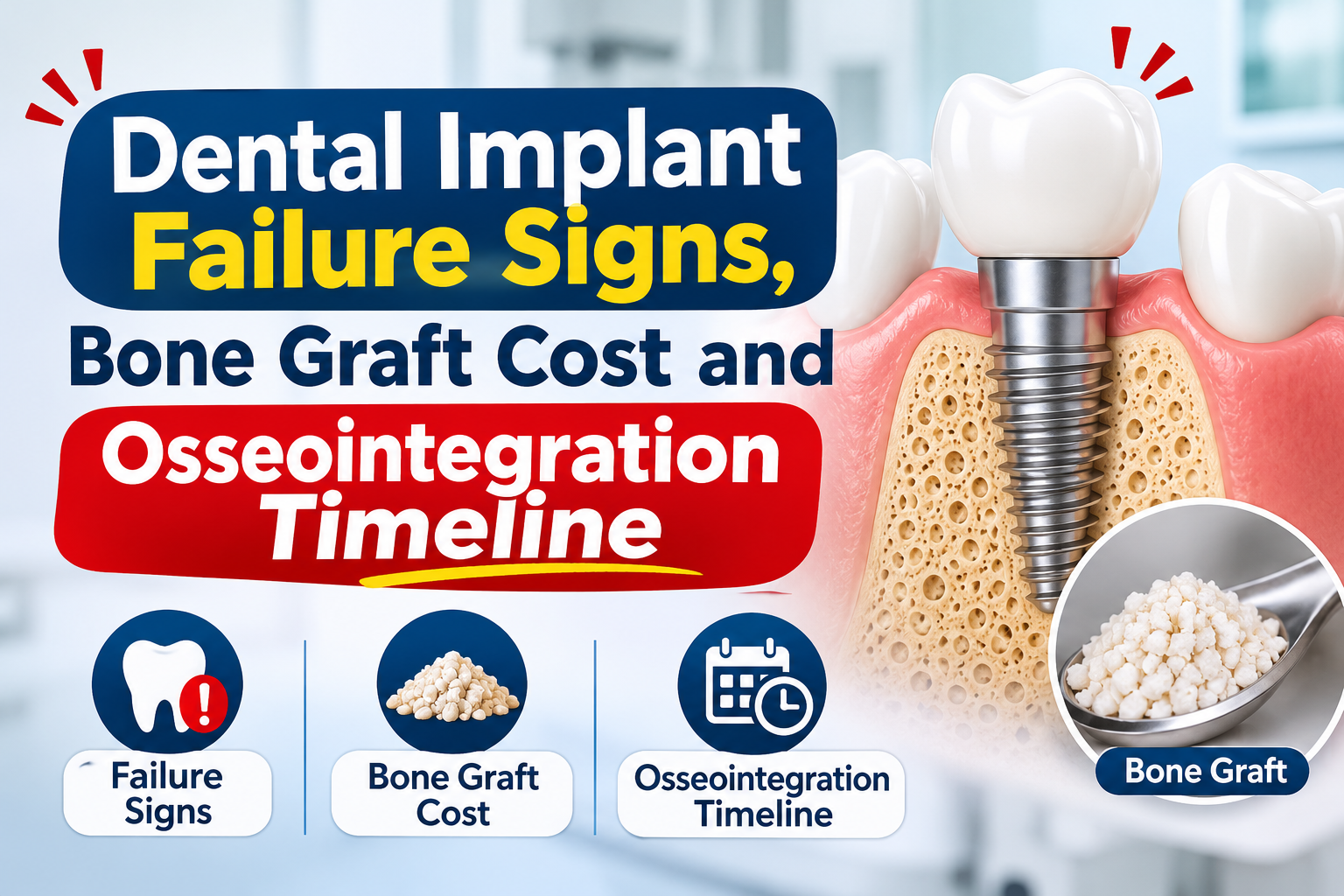
Dental Implant Failure Signs, Bone Graft Cost and Osseointegration Timeline
Dental implants are designed to replace missing teeth with a stable, natural-looking solution. However, successful treatment depends on more than placing an implant in the jawbone. The surrounding bone and gum tissue must heal properly, and the implant needs to integrate securely with the jaw.
If you are considering dental implants or have already undergone treatment, understanding implant failure signs, bone graft costs and the osseointegration timeline can help you make informed decisions.
What Are the Early Signs of Dental Implant Failure?
A dental implant may fail when it does not fuse properly with the jawbone or when the surrounding tissues develop infection and progressive bone loss. Problems can occur during the initial healing period or several years after the implant has been placed.
Watch for these warning signs:
- Persistent or increasing pain: Mild discomfort after surgery is expected, but pain that continues, worsens or returns after healing needs dental evaluation.
- Loose implant: An implant that moves when touched or during chewing may indicate a loss of bone integration. A loose crown or screw can also cause movement, so the dentist must identify the exact problem.
- Swollen or bleeding gums: Redness, tenderness and bleeding around the implant may indicate inflammation.
- Pus or discharge: Discharge, an unpleasant taste or persistent bad breath around the implant can suggest infection.
- Difficulty chewing: Discomfort while biting or a sudden change in how your teeth meet may indicate a mechanical or biological complication.
- Gum recession: Changes in gum levels or visible implant components may be associated with tissue and bone loss.
These symptoms do not automatically mean the implant has failed. A clinical examination and dental X-rays or other imaging are needed to identify the cause. Contact your implant dentist promptly if you notice these changes, particularly implant movement or discharge.
Why Do Dental Implants Fail?
Implant failure can happen for different reasons. Some implants do not achieve successful osseointegration during the initial healing stage, while others develop complications after functioning successfully for years.
Common contributing factors include:
- Insufficient jawbone volume or poor bone quality
- Infection around the implant site
- Untreated gum disease
- Smoking or tobacco use
- Poor oral hygiene and irregular dental check-ups
- Uncontrolled diabetes or other conditions affecting healing
- Excessive biting pressure or untreated teeth grinding
- Placing pressure on an implant before the dentist confirms adequate healing
A detailed dental assessment before treatment helps identify risks and determine whether additional procedures are necessary.
What Is Dental Bone Grafting and When Is It Needed?
Dental bone grafting is a procedure used to rebuild or increase the amount of bone in an area where a dental implant is planned. When a tooth is missing for a long time, the jawbone in that area may gradually shrink. Gum disease, injury and previous tooth extraction can also contribute to bone loss.
If the available bone cannot provide adequate support for an implant, the dentist may recommend grafting.
Depending on the condition of the jaw, bone grafting may involve:
- Socket preservation: Placing graft material into an extraction socket to help maintain bone volume.
- Ridge augmentation: Increasing the width or height of a thin jawbone.
- Sinus lift: Adding bone in the upper back jaw when the sinus leaves insufficient bone height for an implant.
- Minor bone grafting: Repairing a smaller defect around the planned implant area.
The material may come from the patient's own bone, a donor source, an animal-derived source or a synthetic substitute. The dentist selects the appropriate option based on the treatment requirements.
Dental Bone Graft Cost in India
The cost of dental bone grafting depends on how much bone needs to be rebuilt and the complexity of the procedure. A small graft is generally less expensive than extensive ridge reconstruction or a sinus lift.
As a broad indicative reference, some Indian dental providers publish prices of approximately ₹8,000–₹25,000 for bone grafting. This should not be treated as a fixed Coimbatore price: complex procedures, graft material, membranes, imaging and surgical requirements can increase the total.
Before starting treatment, ask for an itemised estimate covering:
- Consultation and CBCT scan charges
- Type and quantity of graft material
- Membrane or additional surgical materials
- Surgeon and procedure charges
- Follow-up appointments
- Implant placement and crown costs, if planned separately
At Uniq Dental Clinic, patients can discuss implant treatment options and obtain a treatment estimate after clinical evaluation. Explore the dental implant treatment options in Coimbatore to understand the available approaches.
What Is Osseointegration in Dental Implants?
Osseointegration is the biological process in which living jawbone grows around and bonds with the dental implant surface. This connection gives the implant the stability needed to support a crown, bridge or denture.
It is an important stage because an implant must achieve sufficient stability before it can safely support normal chewing forces.
Unlike the visible healing of the gums, bone integration happens beneath the surface. Your dentist uses clinical checks and appropriate imaging to assess whether healing is progressing.
Dental Implant Osseointegration Timeline
The healing period varies according to bone quality, implant position, medical history and whether bone grafting is required.
A general treatment timeline may look like this:
1. Implant Placement – Day 1
The implant is positioned in the jawbone following examination and treatment planning. A temporary restoration may be considered in suitable cases.
2. Initial Healing – First 1–2 Weeks
The gum tissue begins to heal around the surgical site. Mild swelling, tenderness and discomfort may occur and should generally improve rather than worsen.
3. Bone Integration – Around 2–6 Months
The bone gradually bonds with the implant surface. Many conventional implant treatments require approximately 3–6 months before the final restoration, although the timing varies by case.
4. Additional Healing After Bone Grafting
When a separate bone graft is needed, the graft may require several months to mature before implant placement. A common planning range is around 3–6 months, but larger grafts may need longer.
5. Final Crown Placement
Once the dentist confirms adequate integration and stability, the final crown or prosthesis can be fitted.
These are general estimates, not guaranteed treatment deadlines. Some patients may qualify for immediate or early loading, while others need a longer healing period.
How Can You Protect Your Dental Implant After Treatment?
Long-term implant health depends on consistent care. Follow your dentist's instructions and maintain these habits:
- Brush twice daily using a soft-bristled toothbrush.
- Clean between teeth and around the implant with suitable floss or interdental tools.
- Attend follow-up appointments as recommended.
- Avoid smoking and tobacco products.
- Manage teeth grinding if you have a clenching habit.
- Seek treatment for gum inflammation instead of ignoring it.
- Avoid putting excessive pressure on the implant during the healing period.
Regular professional monitoring helps identify inflammation and changes in bone levels before they become more serious.
Frequently Asked Questions
Plan Your Dental Implant Treatment Carefully
Dental implant treatment involves several stages, from evaluating jawbone condition to confirming osseointegration and fitting the final restoration. Understanding the warning signs, possible grafting requirements and healing period helps you ask the right questions before treatment.
If you are considering missing-tooth replacement or experiencing discomfort around an existing implant, consult a dental professional for an individual assessment. Visit Uniq Dental Clinic in Coimbatore to discuss your dental implant concerns and treatment options.
Uniq Dental Clinic
43, B-10, Sathy Road, Near Hotel Annapoorna,
Ganapathy, Coimbatore, Tamil Nadu 641006
Phone: +91 99424 22008
Call Now