





Clear Aligner Tracking Error: Air Gaps Between Teeth and Aligner Tray
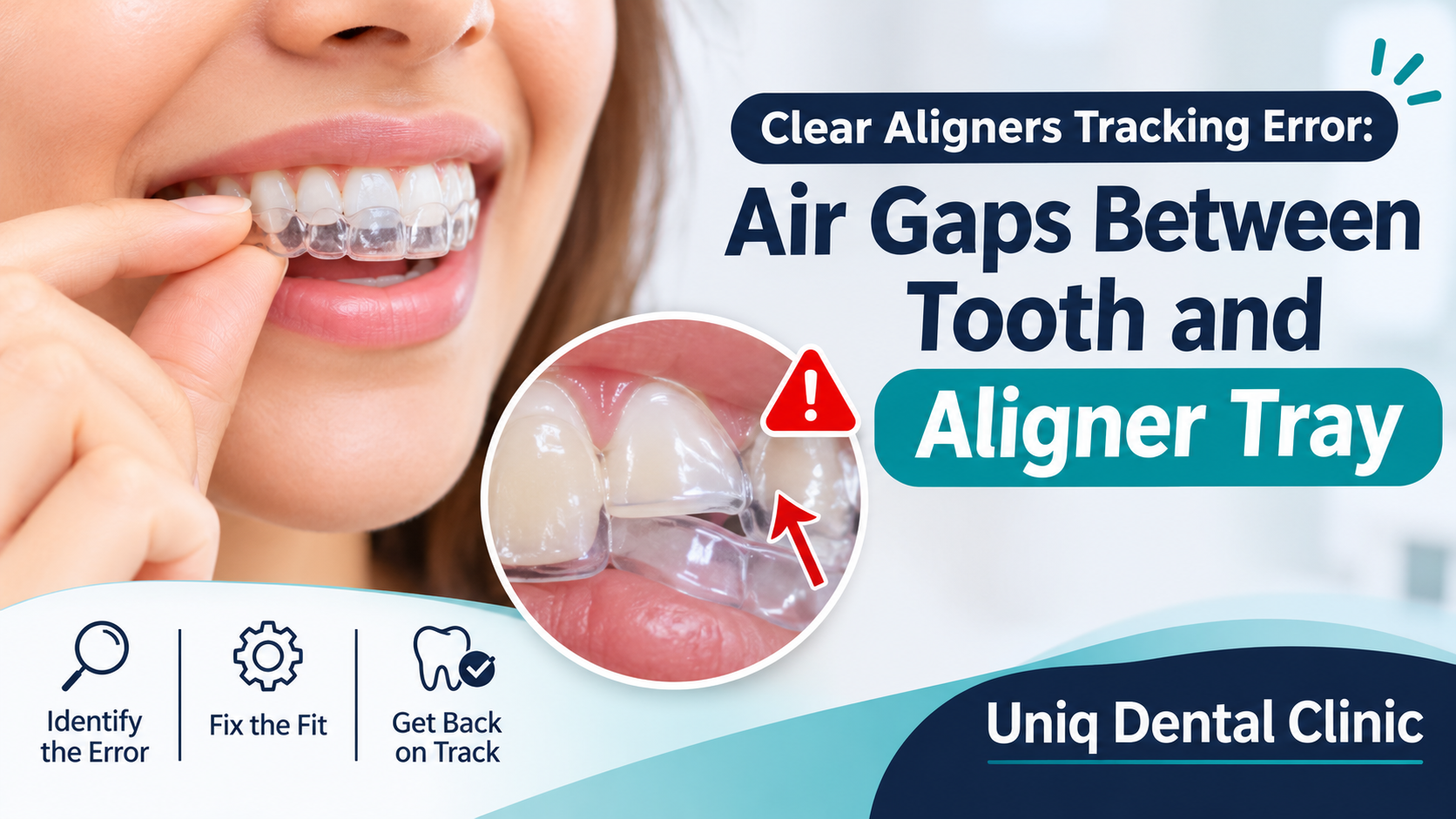


Clear Aligner Tracking Error: Air Gaps Between Teeth and Aligner Tray
Clear aligners are designed to move teeth gradually through a planned sequence of transparent trays. Each aligner applies controlled pressure to specific teeth to achieve the desired alignment. However, sometimes patients notice a small space between a tooth and the plastic tray, even when the aligner is fully inserted.
This is commonly associated with a clear aligner tracking error, also known as off-tracking. It means that one or more teeth may not be moving exactly as planned in the digital orthodontic treatment.
An air gap does not automatically mean your treatment has failed. However, a persistent gap should not be ignored because continuing through the aligner sequence without checking the fit may affect the final result.
If you notice an air gap during your clear aligner treatment, here is what it could mean, why it happens and when to consult your orthodontist.
What Is Clear Aligner Tracking?
Tracking refers to how closely your teeth follow the planned movements shown in your orthodontic treatment plan.
Every aligner is designed for a particular stage of tooth movement. When tracking is good, the tray fits closely around the teeth and their attachments, allowing the planned forces to work.
A tracking problem may occur when:
- A tooth does not move into its expected position.
- The aligner does not fit closely around a particular tooth.
- The tray lifts away from the front or back teeth.
- The attachment does not engage properly with the aligner.
The visible space between the tooth and tray is sometimes described as an air gap or halo. It can indicate that the tooth is lagging behind its planned movement.
How to Identify an Air Gap Between Your Teeth and Aligner
You may notice one or more of the following signs while wearing your clear aligners:
1. Visible Space Around a Tooth
A small space appears between the edge or surface of a tooth and the corresponding part of the aligner. It may be more noticeable around front teeth or canines.
2. Aligner Not Sitting Completely
The tray may appear properly fitted in one area but remain slightly raised around another tooth.
3. Attachment Not Fitting Properly
If your treatment uses small tooth-coloured attachments, the aligner may not engage correctly with an attachment when the tooth is not tracking as expected.
4. Tray Lifting or Rocking
The aligner may move slightly when you speak or bite gently, suggesting that it is not fully seated.
A small space at the beginning of a new aligner stage may sometimes be part of the planned movement. What matters is the location, size and persistence of the gap. Your orthodontist should assess whether it is expected or indicates a tracking problem.
Common Causes of Clear Aligner Tracking Errors
Several factors can affect how accurately teeth follow the digital treatment plan.
1. Not Wearing Aligners for the Recommended Hours
Clear aligners generally need to be worn for approximately 20–22 hours per day, depending on the treatment instructions.
Frequently removing them, forgetting to wear them or leaving them out for long periods can reduce the time available for planned tooth movement.
2. Switching to the Next Aligner Too Early
Each tray needs sufficient wear time to achieve its planned movement. Moving to the next set before the current stage is complete can create a mismatch between the teeth and the new aligner.
3. Missing or Damaged Attachments
Attachments help aligners apply specific forces, particularly for movements such as rotation and controlled tooth positioning. If an attachment becomes detached or damaged, the intended movement may become less predictable.
4. Complex Tooth Movements
Some movements, including rotating severely turned teeth, moving certain teeth vertically and correcting particular bite problems, can be more challenging with aligners.
These movements may require additional monitoring or orthodontic adjustments.
5. Insufficient Space Between Teeth
Sometimes teeth cannot move into their planned positions because there is not enough space. Your orthodontist may have planned interproximal reduction (IPR) or another treatment adjustment to address this.
6. Poor Aligner Seating or Tray Damage
An aligner that is not fully seated, has become distorted or is damaged may not deliver the intended forces correctly.
What Should You Do If There Is an Air Gap?
If you notice a persistent gap, avoid making changes to your treatment schedule without professional advice.
Step 1: Check the Aligner Fit
Look at the affected tooth in good lighting. Check whether the tray is seated properly around the front and back teeth and whether any attachment appears damaged or missing.
Step 2: Review Your Wear Routine
Check whether you have been following the prescribed daily wear time. Think about whether you have frequently removed the aligners or missed wearing them.
Step 3: Contact Your Orthodontist
Share clear photographs showing the front, left and right sides of your teeth with the aligners inserted. Your orthodontist can assess whether the gap needs an in-person examination.
Step 4: Follow the Recommended Correction
Depending on the cause, your orthodontist may recommend improving tray seating, continuing the current aligner for longer, replacing an attachment or modifying the treatment plan.
Do not move to the next aligner, return to an earlier tray, trim or heat the plastic, or change the wear schedule on your own. Follow the instructions of your treating orthodontist.
How Do Orthodontists Correct Aligner Tracking Problems?
The appropriate correction depends on which teeth are affected and why they are not following the planned movement.
Possible clinical approaches include:
- Improving aligner seating: Specialised aligner chewies may be recommended to help seat a slightly unseated tray.
- Replacing attachments: Missing or damaged attachments may need to be replaced to restore the intended force.
- Adjusting the treatment sequence: The orthodontist may recommend additional wear time or a different sequence.
- Creating additional space: IPR may be considered when insufficient space is affecting tooth movement.
- Refinement aligners: If the teeth have moved differently from the original plan, a new digital scan may be needed to design additional aligners.
Not every tracking error requires a completely new treatment plan. A clinical assessment helps determine the appropriate correction.
Can You Prevent Air Gaps During Clear Aligner Treatment?
Although every patient's tooth movement is different, following your orthodontist's instructions can help reduce avoidable tracking problems.
- Wear your aligners for the prescribed number of hours daily.
- Remove them only when required for eating, drinking beverages other than water and oral hygiene.
- Clean and store your aligners properly.
- Use chewies only as instructed by your orthodontist.
- Avoid skipping aligner stages.
- Attend scheduled progress appointments.
- Contact your clinic if an attachment becomes loose or a tray gets damaged.
Regular monitoring is important because identifying a tracking issue early may help prevent further delays.
Clear Aligner Tracking Assessment at Uniq Dental Clinic, Coimbatore
If you notice air gaps between your teeth and aligner tray, an orthodontic assessment can help identify whether the teeth are tracking according to the treatment plan.
At Uniq Dental Clinic, Coimbatore, clear aligner and Invisalign treatment involves digital treatment planning and regular progress monitoring. The orthodontic team uses clinical assessments and digital scanning technology to evaluate tooth movement and treatment progress.
Patients undergoing Invisalign treatment in Coimbatore can discuss aligner fit, missing attachments, delayed tooth movement and possible refinements with the treating orthodontist.
Whether you are using Invisalign or another clear aligner system, the correction should be based on your individual treatment plan. Learn more about clear aligners versus Invisalign before choosing an orthodontic treatment.
For an aligner fit assessment or treatment consultation, contact Uniq Dental Clinic at +91 99424 22008.
Clinic Address: 43, B-10, Sathy Road, Near Hotel Annapoorna, Ganapathy, Coimbatore, Tamil Nadu 641006.
You can also visit the Uniq Dental Clinic website to explore orthodontic treatments and appointment details.
Frequently Asked Questions About Clear Aligner Tracking Errors
An air gap is a visible space between a tooth and its aligner tray. If it persists, it may indicate that the tooth is not following the planned movement, a condition known as tracking loss or off-tracking.
A small gap may sometimes appear when a new tray is first inserted, depending on the planned tooth movement. It should be monitored according to your orthodontist's instructions. A persistent or increasing gap needs assessment.
Do not advance to the next aligner without checking with your treating orthodontist. The current tray may need further assessment before continuing the sequence.
Chewies can help seat an aligner that is not fully fitted. However, they cannot correct every tracking problem. Use them only according to your orthodontist's instructions.
Yes. Attachments help aligners apply specific forces to teeth. If an attachment is missing or damaged, the planned movement may be affected and should be checked.
Not necessarily. Some cases can be managed by adjusting the current treatment stage or replacing an attachment. If tooth positions have changed significantly from the original plan, your orthodontist may recommend a new scan and refinement aligners.
Follow the review schedule prescribed by your orthodontist. At Uniq Dental Clinic, the published Invisalign treatment guidance describes progress checks approximately every 6–8 weeks, although individual schedules may differ.